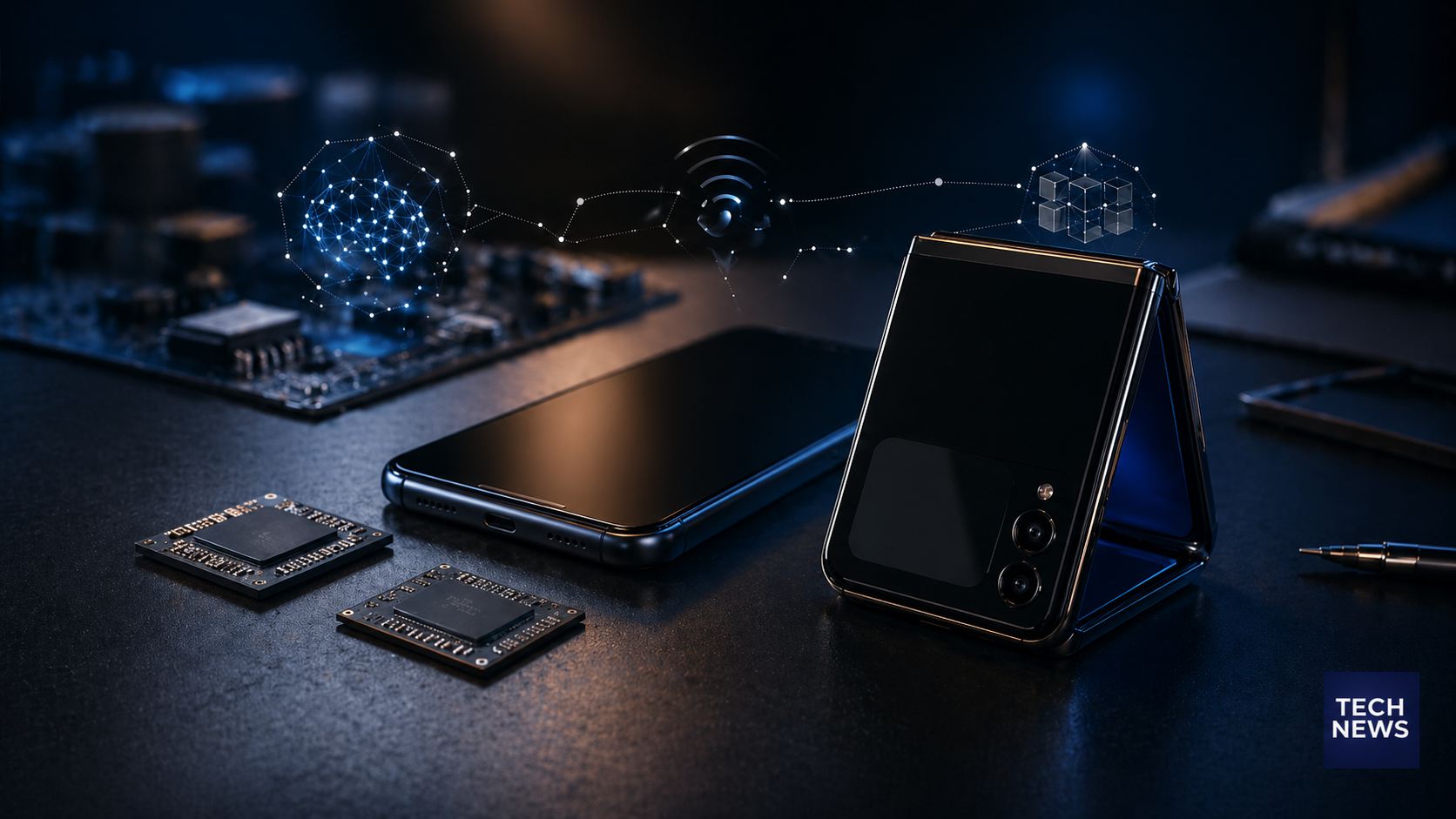
MediaTek’s Dimensity 7450 and 7450X bring AI, camera, 5G and dual-display features deeper into the midrange smartphone market.
MediaTek has introduced two new chipsets, the Dimensity 7450 and the Dimensity 7450X, expanding its lineup with targeted support for midrange smartphones and flip-style foldable devices. These releases represent an evolution within the Dimensity 7000 series, aiming to bring premium-tier features into more affordable smartphones.
This development matters because midrange smartphones increasingly reflect capabilities traditionally limited to flagship models. Enhanced AI-assisted imaging, high-refresh-rate displays, advanced 5G connectivity, Wi-Fi 6E, and foldable screen compatibility are converging into this more accessible price segment, reshaping consumer expectations and driving broader adoption of advanced mobile technologies.
Both chips feature an octa-core CPU configuration combining four Arm Cortex-A78 cores running up to 2.6GHz and four Arm Cortex-A55 efficiency cores. They support LPDDR5 and LPDDR4x memory standards, UFS 2.2 and 3.1 storage options, Bluetooth 5.4, Wi-Fi 6E, and peak 5G download speeds up to 3.27Gbps under optimal network conditions. These specifications signal incremental improvements rather than radical upgrades over the previous Dimensity 7400 generation.
MediaTek’s Dimensity 7450X introduces chipset-level dual-display support critical for the evolving flip-phone foldable market.
The Dimensity 7450X differs primarily by enabling dual-display functionality tailored for flip-style foldable smartphones. This capability, managed at the chipset level, improves synchronization between inner and outer screens, enhancing features like notifications, camera previews, quick replies, and multimedia controls. While the end-user experience depends heavily on software implementation and device design, MediaTek’s chipset establishes a key technical foundation for foldables’ next growth phase.
From a consumer perspective, these chips herald gradual yet meaningful upgrades. Improved AI processing can enhance camera performance through features like refined autofocus, exposure adjustments, and power-efficient imaging. Support for high-resolution 200MP cameras and 4K video at 30fps offers smartphone makers flexibility to develop advanced photographic capabilities without significantly increasing device costs.
Connectivity is also a focus. Support for 5G Release 17, carrier aggregation, and Wi-Fi 6E aims to deliver more stable wireless connections and improved battery efficiency, particularly in sub-6GHz 5G scenarios. While these efficiency claims await independent testing, they illustrate the competition among chipset makers to balance speed with reliability and energy consumption.
Despite these advancements, the line between the new Dimensity 7450 series and the prior 7400 generation remains subtle. The unchanged CPU layout and clock speeds suggest these releases function more as refinements rather than generational leaps. Consequently, consumers should consider broader device attributes — such as camera system quality, thermal design, software support, battery capacity, display technology, charging speeds, and update policies — alongside chipset branding when evaluating new smartphones.
What remains unclear is the timing and identity of manufacturers adopting these new chipsets, their availability by region, and the real-world benefits they will offer compared to existing models. The next notable milestone will occur as phone makers announce devices using these chips, allowing for detailed reviews addressing battery longevity, camera performance, and foldable-screen functionality.
In summary, MediaTek’s Dimensity 7450 and 7450X signal how midrange smartphones are embracing sophisticated AI, connectivity, and display features that were once exclusive to flagship phones.