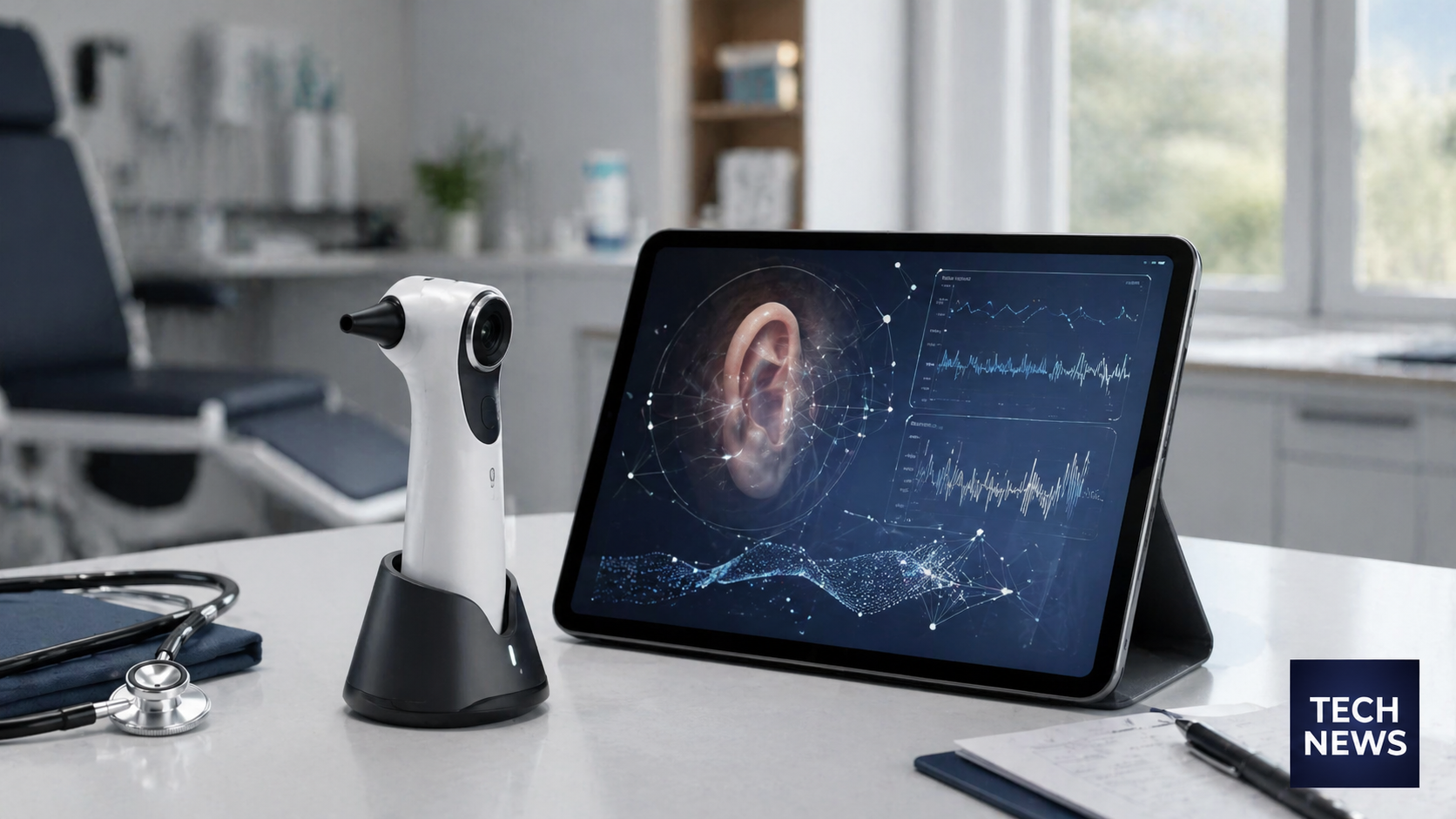
TytoCare announced FDA De Novo classification for AI eardrum bulging detection, advancing regulated AI support for remote ear exams.
TytoCare announced on April 27, 2026, that the U.S. Food and Drug Administration (FDA) granted De Novo classification to its Tyto Insights for Eardrum Bulging Detection software, an AI-enabled tool designed to analyze video recordings from TytoCare’s digital otoscope. This regulatory milestone, with a decision date of March 17, 2026, confirms the product as a Class II medical device and enables its use in clinical and telehealth settings for patients aged six months and older.
This approval marks a significant advancement at the intersection of telehealth, home medical exams, and artificial intelligence, illustrating how AI-assisted diagnostics are being integrated into regulated healthcare workflows. The device is intended as an over-the-counter, web-based analytic tool that automatically detects eardrum bulging—a clinical indicator relevant for conditions such as acute otitis media—from recorded otoscopic videos.
The FDA decision summary clearly states that while the software provides analysis results—positive, negative, or unable to analyze—it does not replace professional medical diagnosis. The clinical context remains essential: providers must evaluate the AI output in conjunction with the otoscopic imagery and the patient's overall clinical presentation. This nuance is crucial because eardrum bulging is a key sign in diagnosing middle ear infections but must be assessed alongside symptoms such as ear pain and redness, per CDC pediatric outpatient care guidelines.
The FDA emphasizes the device is not intended for autonomous diagnosis, requiring healthcare provider interpretation alongside the imaging and patient data.
The agency’s De Novo classification pathway applies to novel devices without existing predicate devices, allowing TytoCare’s product to serve as a foundation for future FDA clearances. The tool is identified in FDA records under regulation number 21 CFR 874.4775 (although there is a noted discrepancy in some documents with 874.4475 that requires verification), product code SHL, and classified as Class II.
Technically, the AI software analyzes otoscopic video captured via the compatible Tyto Otoscope. It incorporates a quality filter to assess video suitability and an algorithm trained on over 3,100 annotated real-world recordings. TytoCare’s proprietary database, which includes approximately 1.6 million ear images and recordings, informed development of the broader ENT Suite AI diagnostic portfolio.
The FDA’s evaluation highlighted inherent risks, such as the possibility of incorrect patient management if AI outputs are inaccurate, potentially leading to inappropriate treatment decisions. To mitigate these concerns, strict labeling and warnings direct lay users against relying solely on the software for diagnosis, and instruct clinicians to integrate the software’s findings with comprehensive clinical data.
TytoCare frames this FDA decision as a step toward embedding AI-powered decision support more broadly into primary care exams. The ENT Suite is part of a growing trend where remote healthcare increasingly involves connected diagnostic devices and structured data interpretation, moving beyond basic telehealth video calls toward hybrid care models with regulated software analysis.
For patients and families, the practical impact is that this tool enables clinicians to access additional structured information from home or clinic ear exams, potentially enhancing remote evaluation accuracy without replacing expert judgment. For healthcare providers, the classification may facilitate more standardized review of otoscopic recordings through AI assistance while ensuring they retain critical decision-making authority.
Looking ahead, questions remain about how widely Tyto Insights will be adopted across health systems, how it will be integrated into clinical workflows, and how ongoing performance will be monitored during real-world use. Although the FDA approval opens a regulated pathway for this AI-assisted function, the key test will be implementation: whether such technology improves access, diagnostic consistency, and care quality without fostering misunderstandings about the AI’s role in medical diagnosis.