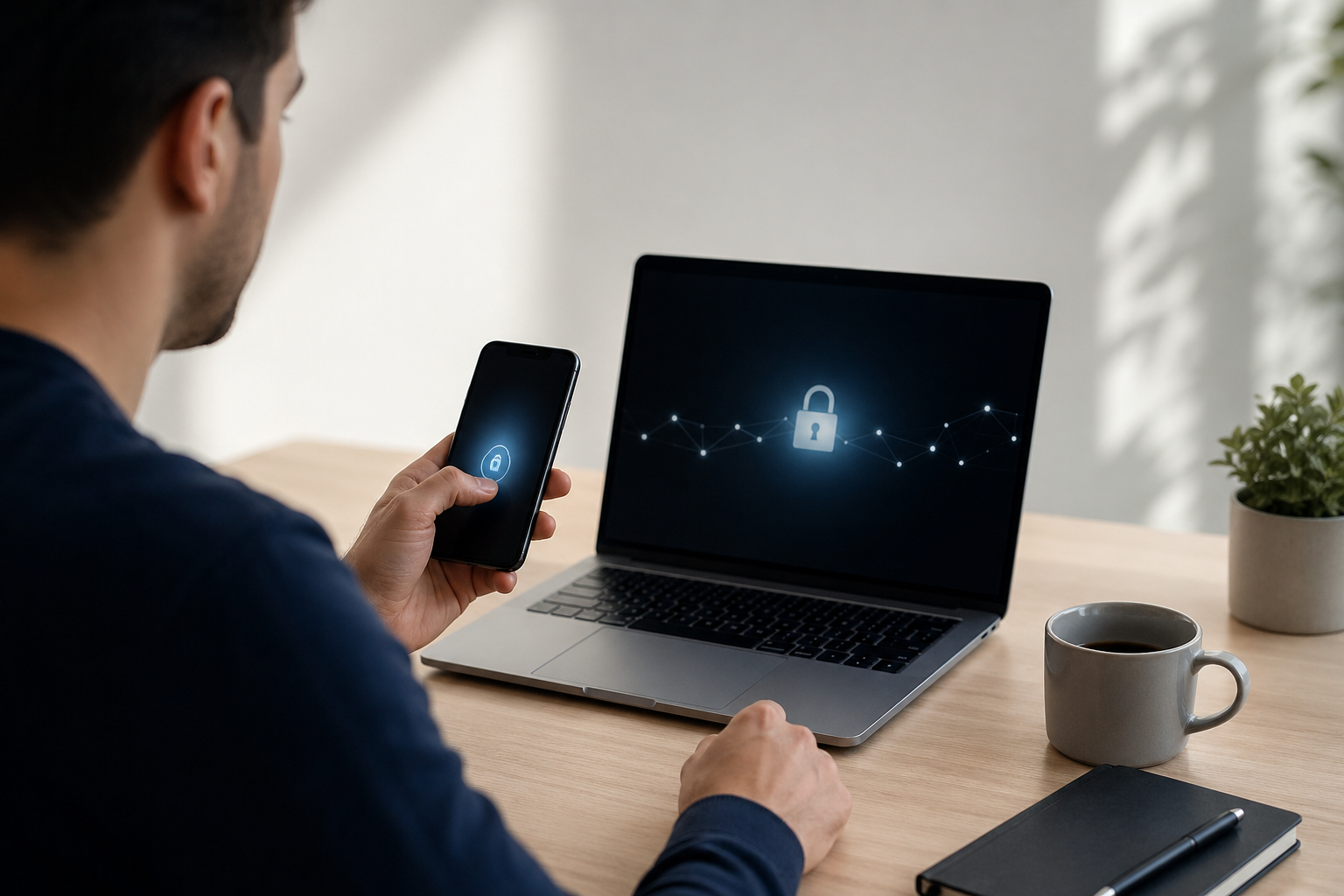
Passkeys are now a real sign-in option across major consumer technology platforms, replacing typed passwords with cryptographic credentials stored on a user’s device or synchronized through a credential provider. The FIDO Alliance describes passkeys as FIDO credentials for passwordless authentication that use cryptographic key pairs and can be either synced across devices or bound to a particular device.
The change matters because passwords remain one of the most fragile parts of daily digital life. People forget them, reuse them, write them down, reset them through email or SMS, and often face confusing login flows across shopping, banking, work, entertainment, and social platforms. Passkeys try to replace that routine with the same action people already use to unlock a phone or computer: a fingerprint, face scan, device PIN, or local unlock method. FIDO says passkeys are designed so there are no shared secrets to steal, while WebAuthn defines public key credentials that are scoped to a relying party and can only be accessed by origins belonging to that relying party.
The strongest case for passkeys is practical, not only technical. Google said in May 2024 that passkeys had been used more than 1 billion times across more than 400 million Google Accounts, and that they were 50% faster than passwords in its account flow. Amazon later said more than 175 million customers had enabled passkeys and could sign in six times faster than otherwise. Microsoft said in May 2025 that brand-new Microsoft accounts would be “passwordless by default,” meaning new users would not need to create a password during account setup.
That does not mean passwords have ended. The more accurate conclusion in 2026 is that passkeys are becoming a mainstream alternative on large platforms, while passwords remain necessary across much of the wider web. A 2026 paper on passkey authentication across the top 100,000 Tranco-ranked domains found that measuring adoption remains difficult because websites expose passkey support in different ways, including visible buttons, hidden flows, JavaScript behavior, and external identity providers. The same study found that adoption correlates strongly with site popularity and often depends on external identity providers rather than native implementation.
For everyday users, the benefit is clearest on accounts where passkeys are already well integrated: a phone approves the sign-in, the website receives a cryptographic proof, and the user avoids typing a reusable password. Apple says passkeys synced with iCloud Keychain are available across Apple devices and can be used to sign in to apps and websites on non-Apple devices. It also says passkeys are linked to the app or website they were created for, making them resistant to being used on fraudulent sites.
The open question is no longer whether passkeys work as a technical idea. The question is whether the recovery, portability, and user experience around them can become simple enough for ordinary people. A person who loses a phone, changes from one ecosystem to another, shares a family device, or manages accounts for an older relative needs a recovery path that is secure but understandable. FIDO’s credential exchange specifications attempt to address part of this portability issue by defining a standard format for transferring credentials, including passkeys, between credential managers in a secure-by-default way.
There is also a trust shift. Passwords put much of the burden on the individual user; passkeys move more of the burden to operating systems, browsers, device makers, and credential managers. That may improve security for many people, but it also means users must understand where their passkeys are stored, how they sync, and what happens when they change devices. FIDO says passkeys can be synced through providers such as built-in credential managers or third-party providers, and that syncing is meant to make passkeys available across a user’s devices.
For businesses, the transition is also operational. A company that adds passkeys must decide whether passwords remain as fallback, how account recovery works, whether older devices are supported, and how customers are taught to recognize the new sign-in flow. If a password or SMS fallback remains the easiest recovery route, the account may still inherit some of the weaknesses passkeys were meant to reduce. If fallback is too strict, users may be locked out.
The most likely near-term future is not a sudden death of passwords, but a gradual decline over time. Passwords may become less visible on major services, especially for new accounts, while remaining in place for older accounts, smaller websites, legacy business systems, and recovery flows. The next phase will be judged less by headlines about a “passwordless future” and more by whether ordinary users can move between devices, recover access safely, and understand why a passkey is not just another password with a new name.